Welcome

So a long time ago (the mid-1990s), the greatest writer in comics agreed to take over the writing duties for Image Comics' Supreme. He would radically reshape the character, the book, and due to forces beyond his control, a whole comic book universe. And it led to an award-winning run of comics, three additional titles (among several proposed) and ultimately led to the genesis of Moore's much better known America's Best Comics. And then it all went out of print and was forgotten by way too many.

Having gathered quite a bit of information about Moore's Supreme and Awesome runs, I decided to create a home for the forgotten Awesome. Over the course of a year, I put it all together here.

Each week I did a main "Weekly Reading" post that was a read-through of that issue. I followed that up with a couple of other posts about topics from that Weekly Reading or whatever else I came up with to talk about. You'll find the lost Youngbloods in the Youngblood section and the fan-edit of the last Supreme in After Awesome.

Below is the archive of posts broken up by book. Thanks for checking the site out!

Book 1: Supreme: The Story of the Year

Book 1: Judgment Day

Book 3: Supreme: The Return

Book 4: Youngblood

Book 5: Glory

Book 6: After Awesome

Book 7: 1963

Book 8: Night Raven

Book 9: A Small Killing

Thursday, October 18, 2018

Night Raven: The Cure, Part 2


How to read Night Raven


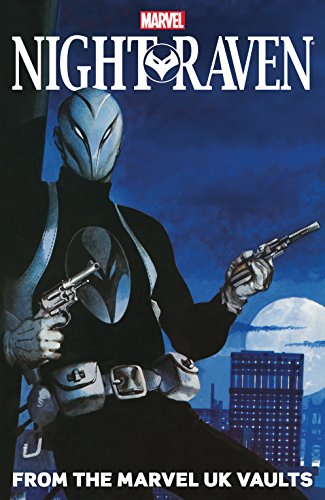
You can read Alan Moore's Night Raven stories by buying the print or digital collection here.

If you're less respecting of copyright or you just want to try it out before deciding to buy, you can follow along here.

The Cure, Part2


You can check out my read through of part 1 here. And for more background info on Night Raven, go here.

The story picks up where we left off in Part 1 with reporter Scoop Daley dealing with Night Raven having kidnapped his wife Sadie so that Scoop will deliver the cure to the poison Night Raven has in his system.

The first thing that jumps out is how Scoop's mind is terrorizing him, especially the fear of Night Raven cutting Sadie. "Because when the razor dips into flesh, flesh that offers no more resistance than ice cream, and it does that awful stuff, that stuff your mind can't swallow, and you know that whatever happens, nothing can ever make that crimson ruin look right again..."

As Scoop explains, "Your mind does bad things to you when you lose somebody that you love. Suddenly it isn't your best friend anymore."

What Moore does so well is set up the consequences and let's us stew in Scoop's fears, so by the time we get to the end, we feel like we're in his place. 

Then Moore recaps what happened in Part 1 for quite a while. Eventually Scoop goes to the wharf to meet Night Raven. Moore has always been able to capture the feeling of a setting and this wharf is no different.

"Wharves are like forgotten outposts in some terrible war of attrition between the sea and the land. The war still goes on, but it’s quieter here. Every year the algae creeps a little higher up the sodden, salt-encrusted wood of the support posts. Every two years fat, bad-tempered men who smoke Luckies come and paint it over with pitch and the sea has to start its assault all over again, slowly, steadily, an inch at a time.

"The sea creeps. You can hear it."

Night Raven shows up and confronts Scoop demanding the cure. Scoop's description of Night Raven is evocative:

"The trenchcoat was looking a lot dirtier than when I'd last seen it. The years hadn't been kind. It was frayed and grey and there were a couple of buttons missing. Over the years the posture of the body beneath it had changed, slowly knotting into the hunched crouch of an animal at bay, and the coat didn't hang properly any more. It was evolving the wrong kind of creases. The brim of the slouch hat hung defeated. It had lost its war with the rain. And beneath the hat brim was the mask. It was more or less the same as it had been when I last saw it, nearly ten years before. I still couldn’t put my finger on what it reminded me of even after all that time. Something like a bird, something like the skull of a steer bleaching in the Death Valley sunshine, and something else. Something I couldn’t quite get."

The way he describes this is the same way Moore has praised H.P. Lovecraft for his descriptions of his terrible monsters. He describes what it's sort of like but there is something missing that isn't able to be described that then gets filled in by the dark recesses of the mind of the reader.

Scoop explains to Night Raven why he can't give Night Raven the cure. It's because it's a counter disease that would spread everywhere Night Raven went, killing millions. He also can't give it to Night Raven because he already tossed it into the river, knowing he'd be too weak when confronted with his hostage wife.

Night Raven moves to kill Scoop with a scalpel but he approaches so slowly that Scoop was able to use the gun in his pocket to shoot the poisoned man. As he was shooting, the mask fell off. "I could see his face. His face. I don't want to talk about his face."

Before toppling into the water, Night Raven smiled and whispered "The Cure."

We end much later with Scoop looking at the bottle he lied about throwing into the river. And he's haunted by the thought, "What if that really is the cure in there? Just a cure. Nothing else." Could that have been Yi Yang's plan all along?

From this first story, Moore set himself up with a few threads he'd get to follow through his run and we get one of the great ones next time. See you next week.

Monday, October 15, 2018

Night Raven: The Cure, Part 1

Alright, let's take care of the first things first.

How to read Night Raven


You can read Alan Moore's Night Raven stories by buying the print or digital collection here.

If you're less respecting of copyright or you just want to try it out before deciding to buy, you can follow along here.

The Cure, Part 1


The Cure is the two-part story with which Moore dipped his toe into the Night Raven story and then proceeded to change it completely.


Previous to this, all of the Night Raven stories had started with the phrase "Night-time in the city..." but Moore quickly puts his stamp on the series by interrupting it mid-phrase and telling the reader that things are going to be different from here on. His Night Raven (or Nightraven...the proper way to spell it changes all the time) is too big and too dark for either the night or the city to contain it.

Moore goes on for a bit about mistakes and how all it takes is one slip. That'll be important, but let's get to the introductions first. Moore is writing from Scoop Daley's point of view. Scoop is a reporter  for the Daily Bugle (yes, the one from Spider-Man) who has turned up in a few strips before this. He works for Editor Jameson (I don't think it's J. Jonah, but maybe his dad since this was set in the 1930s or so?). He's married to Sadie, a woman of such education that she can't identify Shakespeare or Dickens. But Scoop loves her.

This introduction is a second break from previous Night Raven stories. Up until this point, most of the stories were written from a narrator point of view. Moore instead adds a voice in Scoop. This allowed Moore to use different voices and verbal tics, which has always been one of his strengths.

Scoop gives us the background of Night Raven as a Spirit-like adventurer out there taking on gangsters. But as Scoop points out, in real life, a guy who puts on a mask and goes out to beat people up would be called a psychopath. That doesn't stop Scoop from liking him.

I like the way Moore highlights the moral complexity of the title character. Is he a good guy? Is he crazy? Is he violently unhinged? By not looking too hard, you can see some of the seeds for Rorschach.

Scoop points out that something happened to Night Raven. He's changed. His voice has become a low whisper, "Imagine something that sounds like thousands of locust wings rubbing together, imagine the spit and crackle of a tenement fire, imagine the rasp of a straight edge razor over stubble, stuff like that. Now imagine all those things but much, much quieter and you've got something like the sound that used to come from behind that creepy white mask."

He was also much more hunched over and moving as though he were in tremendous pain. (Moore was pulling all the inconsistencies from previous writers and was going to explain how they all worked together.)

Scoop, looking for a story, wanted to find out had brought about these changes in Night Raven and found out from Willy the Lip, a minor-league gangster. Willy had some ties to the Dragon Tong in Chinatown.


Willy tells Scoop that Night Raven is after him. "'It's Nightraven.' That's what he said. Is that three words or two? I dunno. Who cares." Ha ha!

Willy tells Scoop about Yi Yang and how she had lost a lot of face after losing in her last run-in with Night Raven. Other gangs saw this as a sign of weakness and started moving in on the Tong's turf. So Yi Yang wanted to kill Night Raven.

So she sent him a note and somehow it got to him. It was a hexagram from the I-Ching which meant "Breaking Apart." But the note was laced with a poison that fills your body with pain and horror and kills you... 50 years later.

"Yi Yang wanted Nightraven dead. But not quickly." God, do I love Moore's writing on this.

Willy is afraid because Night Raven wants the antidote, and he has it. But it's more than an antidote, it's also a counter disease that could end up killing everyone in New York.


So Scoop takes it off Willy's hands. But that doesn't stop someone from killing Willy.

Scoop rushes home and finds out that Night Raven has ransacked his apartment and kidnapped Sadie. And he wants Scoop to show up at the wharf to give him the cure.

"TO BE CONTINUED"

We'll find out the rest of the story later this week. So, what did you think?

Thursday, October 11, 2018

Night Raven before Moore

And now for something a little different. If you'll permit me, I'd like to take a couple of weeks to talk about a comic that is less Awesome but definitely forgotten. Often treated as a footnote in Alan Moore's stunning career is the serial Night Raven.


Moore wrote a handful of illustrated text stories about the adventures of Night Raven that added up into a wonderful series. I'm amazed at the number of people who haven't read it or turn up their noses at it ("Well, they're text-only stories, not comics.").

I guess it's not that surprising considering they've never been reprinted until just recently, and the recent collection is overpriced. England has different copyright laws, so nothing Moore wrote for Marvel UK could be reprinted without his permission, which he refused to do out of his hatred for Marvel for the longest time. Alan Davis eventually got him to relent on Captain Britain, and presumably, someone (David Lloyd?) got him to finally relent on Night Raven.

Since it is so little known, let me put Night Raven in context of Moore's career for you. Moore wrote these mainly in 1982. He was already writing short stories for 2000AD and had just started Marvelman (later Miracleman) and V for Vendetta for Warrior. He had taken over Captain Britain just the month before. So, these stories are at the beginning of one of his most prolific periods. Moore was exploding in a very big way.

Granted, he only wrote five multi-part stories, but in that space he got to write a dark, brooding, adult-oriented story about a hero (maybe?) going up against an enigmatic, mystical villain. He got to play with so many storytelling devices, including shifting POVs, self delusion, drug use and his well-known twist endings. And he was illustrated by some of his best collaborators in Lloyd and Alan Davis. This was one of Moore's early playgrounds. It's impossible not to see the seeds for Swamp Thing and Rorschach from Watchmen taking root and developing before your very eyes.

Moore has said that he had mainly worked for Marvel UK at the time to do Captain Britain, but liked the editor and recognized it was such a small fly-by-night operation, so was willing to jot off the text pieces for Night Raven and random articles and zine reviews as a favor. Man, what a favor!

I wonder what would have happened if he had followed the path of Night Raven and become a short story and novel writer instead of a comics writer. What would he have written? Would the publishing industry have treated him as poorly as the comics industry has treated him? Would he have had Neil Gaiman's level of fame? It's fun to play out.

Alternatively, I've also always thought that maybe Marvel or some other publisher should have pulled an Avatar and hired Antony Johnson to adapt the stories as comics. If it worked for The Courtyard, it could have easily worked for Night Raven.

Anyway, over the next couple of weeks, I'm going to write about each story separately, with lots of spoilers. (Sorry, it's just that I've been waiting a long time to engage with anyone about these stories.)

And now I've completely overhyped it. Oh well. Let's get into the background.


Night Raven started as an uninspired '30s noir comic, in the vein of The Shadow. It was located in Marvel's New York, with a Jameson working at the Daily Bugle (supposedly J. Jonah's dad?). The only thing it had going for it was some wonderful art by David Lloyd. Stan Lee hated Lloyd's art and got him fired. Interestingly, it was because Lloyd was sick of having to do '30s reference work on Night Raven that made Lloyd tell Moore to not set V for Vendetta in the '30s, prompting Moore to set it in a futuristic London.

The last comic featured the boss of a Chinese gang called the Dragon Tong named Yi Yang.


She sends henchmen and a tiger after Night Raven, but he defeats them all before confronting her. Ultimately, Night Raven branded her on the forehead (he did that to villains) to knock her out, but rather than relent into unconscious, she killed herself with a dagger. This'll be important in a bit.

After that (I guess to save money), the comics gave way to illustrated text stories by Alan McKenzie and Paul Neary (writing as Maxwell Stockbridge).


These text stories were okay, but nothing too interesting: England manor house murder mysteries and other genre stories. Oddly, Night Raven started to have a lisp in some stories and a full on slur in others. He had a base on a secret 13th floor of a building, which never got referenced again. And beneath his mask was the face of a skull.

None of it made any sense whatsoever.

So, when Moore took over scripting these short text stories, as with Swamp Thing, Captain Britain, Marvelman and so many others series, he wiped away what came before and created something new and interesting from the strands that he had left. But we'll see that next time.